
About Stomach Cancer
Stomach (gastric) cancer is a disease in which malignant cells form in the lining of the stomach. Age, diet, and stomach disease can affect risk, and symptoms, often indigestion and stomach discomfort, tend to appear late. In the U.S., 2024 estimates indicated about 26,890 new cases of stomach cancer and roughly 10,880 deaths. Globally, gastric cancer accounts for around 783,000 deaths a year, exceeded only by lung and colorectal cancer.
More from the National Cancer Institute →
About Esophageal Cancer
Esophageal cancer forms in the tissues of the esophagus. Its two most common types are squamous cell carcinoma and adenocarcinoma. Smoking, heavy alcohol use, and Barrett’s esophagus increase risk; signs include weight loss and painful or difficult swallowing. In the U.S., 2024 estimates indicated about 22,370 new cases and roughly 16,130 deaths. The incidence of esophageal adenocarcinoma has risen more than 400% in the past two decades.
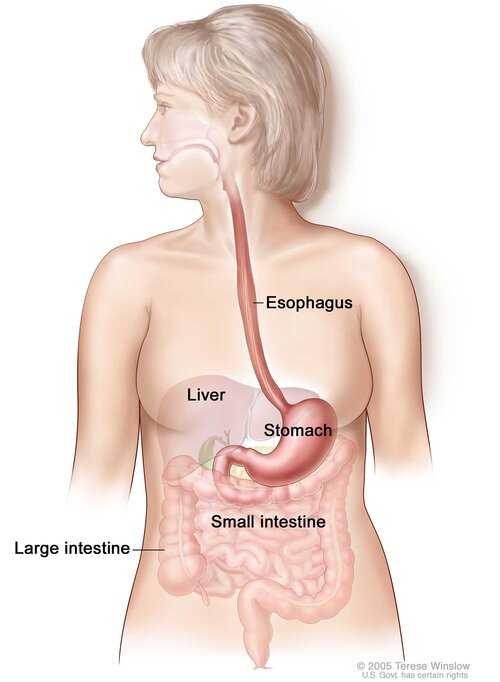
The Stomach & Esophagus
The esophagus is the hollow, muscular tube that moves food and liquid from the throat to the stomach. Esophageal cancer starts on the inside lining and spreads outward through the wall’s layers as it grows. The stomach, a J-shaped organ in the upper abdomen, is part of the digestive system that processes nutrients from the food we eat.
Early diagnosis is key: Stage 1 disease carries a 48–78% survival rate, but symptoms often arise only around Stage 4, where survival falls to roughly 6%.
Read the Stomach Cancer Guide Read the Esophageal Cancer Guide
This page is general information, not medical advice. It is not a substitute for diagnosis or treatment by a qualified health professional. If you have symptoms or concerns, please talk to your doctor. Survival figures are population averages and cannot predict any individual’s outcome.