
Key takeaways
- The most common symptoms are painful or difficult swallowing and weight loss, and they usually appear once the disease has progressed.
- Treatments include surgery, radiation therapy, chemotherapy, chemoradiation, laser therapy, electrocoagulation and immunotherapy.
- Obesity, smoking, alcohol, acid reflux and Barrett’s esophagus all raise the risk.
Typical symptoms of esophageal cancer include painful or difficult swallowing and weight loss. Standard treatments for this type of cancer are radiation therapy, surgery, chemotherapy, chemoradiation therapy, laser therapy, electrocoagulation and immunotherapy.
This guide is based on information from the National Cancer Institute (NCI), the U.S. government’s principal agency for cancer research, and will cover the typical and rare symptoms of esophageal cancer along with stomach cancer symptoms. The guide also outlines treatments, cures and esophageal cancer research. Lastly, you’ll have the most common questions about esophageal cancer answered.
Esophageal cancer symptoms
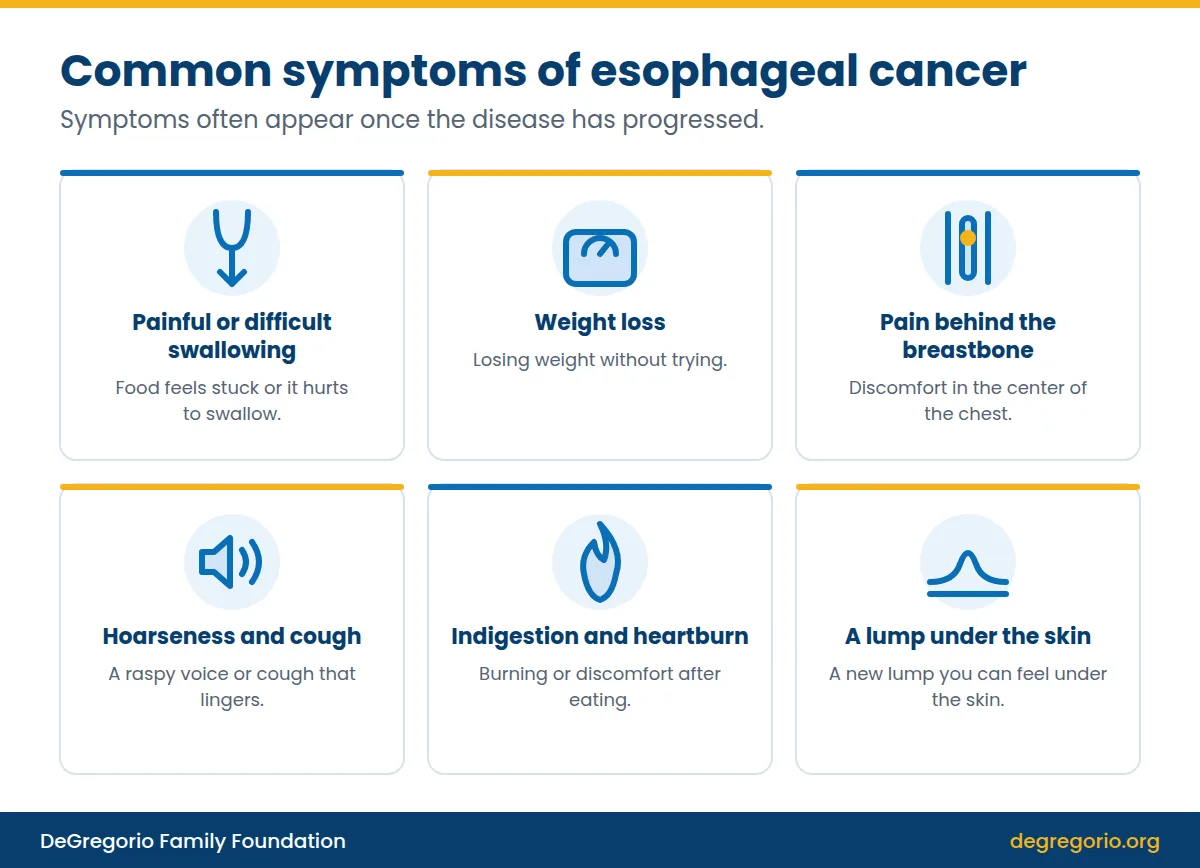
Unfortunately, when one experiences symptoms from esophageal cancer, in most cases, the disease has likely progressed to later stages. The typical symptoms of this cancer type include:
- Painful or difficult swallowing
- Weight loss
- Pain behind the breastbone
- Hoarseness and cough
- Indigestion and heartburn
- A lump under the skin
Stomach or gastric cancer symptoms are also similar to esophageal cancer, which include problems swallowing, weight loss, indigestion and stomach discomfort. Learn more in our stomach cancer guide.
Esophageal cancer treatments
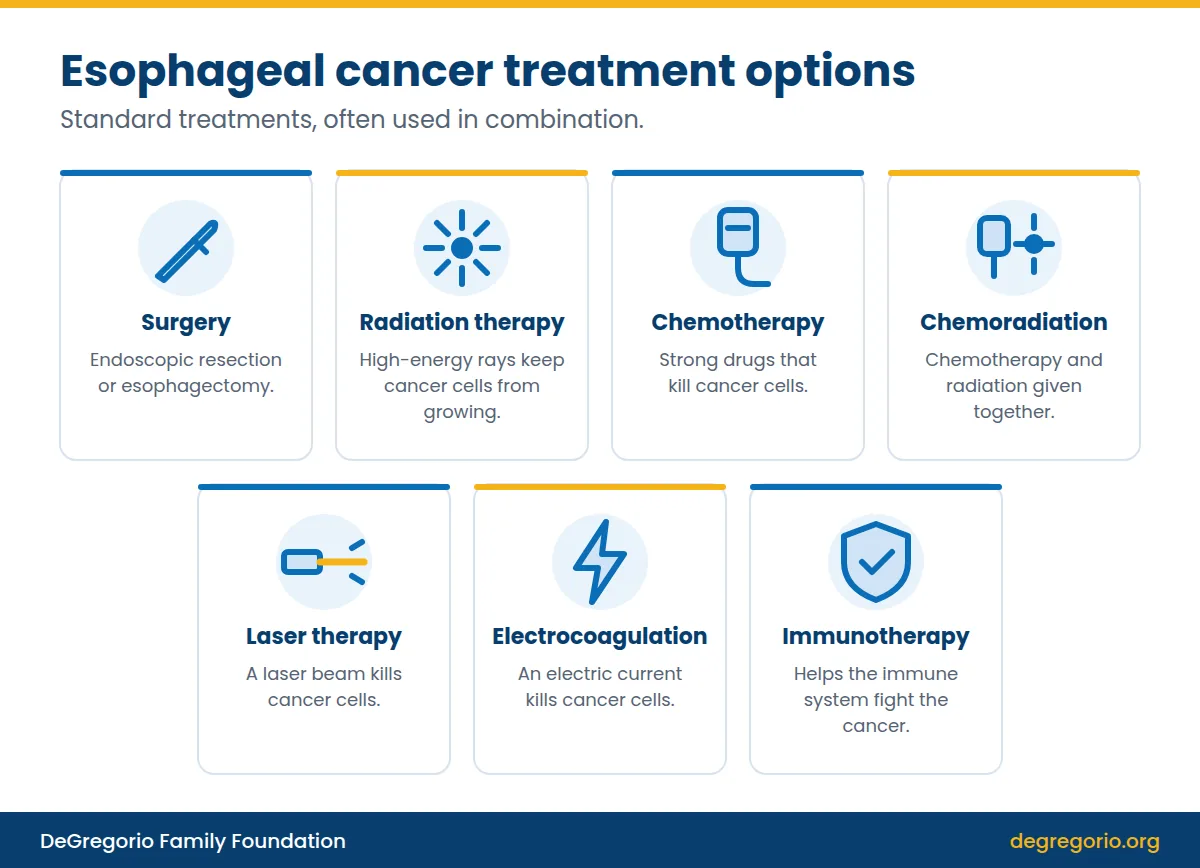
Treatments for this type of cancer are surgery, radiation therapy, chemotherapy, chemoradiation therapy, laser therapy, electrocoagulation and immunotherapy. New types of treatment such as targeted therapy are being tested in clinical trials. Targeted therapy uses drugs or other substances to target and attack cancer cells. Usually, targeted therapies are less harmful than chemotherapy or radiation therapy. Patients have special nutritional needs during esophageal cancer treatments.
Surgery
Surgery is the most common treatment for esophageal cancer. In early-stage cancer, part of the esophagus tissue can be removed by endoscopic resection. Patients can also have an esophagectomy where a portion of the esophagus is removed and the stomach is re-connected to the remaining esophagus.
Radiation therapy
Radiation therapy targets cancer cells by using high-energy X-rays or other radiation beams to keep them from growing. This type of treatment can be customized to each patient depending on the type and stage of the cancer being treated.
Chemotherapy and chemoradiation
Chemotherapy involves very strong drugs that kill cancerous cells and can prevent them from coming back. Chemoradiation therapy combines chemotherapy and radiation therapy to increase the effects of both.
Laser therapy and electrocoagulation
Laser therapy is a cancer treatment that uses a laser beam to kill cancer cells. Electrocoagulation is the use of an electric current to kill cancer cells.
Immunotherapy
Immunotherapy is a treatment that uses the patient’s immune system to fight cancer.
Is there an esophageal cancer cure?
Unfortunately, esophageal cancer is usually diagnosed in later stages when symptoms start appearing. While there are treatments available for esophageal cancer, the five-year relative survival rate of esophageal cancer is relatively low. Patients diagnosed early have a better likelihood of long-term survival.
A possible cure often starts with surgery, which is most successful in people whose cancer did not spread outside the esophagus. Surgery may involve removing part of or all of the esophagus along with the tumor. However, when the cancer spreads to other parts of the body, a cure is very rare for patients.
A stomach cancer cure, which is a cancer type also known as gastric cancer, also has a low five-year survival rate. In most cases, stomach cancers are cured only when diagnosed in the early stages.
In fact, stomach cancer and esophageal cancer, also called gastroesophageal cancer, are the second leading cause of cancer deaths worldwide.
Nonetheless, ongoing innovative and cutting-edge research into these cancers may improve survival rates in the coming years.

Frequently asked questions
Is cancer of the esophagus treatable?
Cancer of the esophagus is treatable, especially during the early stages of the disease before it progresses to other parts of the body. However, the five-year survival rates of this cancer type are relatively low as noted. Common treatments include surgery, chemotherapy and radiation therapy. More innovative and cutting-edge methods to improve treatment include immunotherapy.
How does someone get esophageal cancer?
Scientists believe that obesity, smoking tobacco and drinking alcohol may damage the DNA in the esophageal cells and lead to this disease.
In addition, long-term irritation to the esophagus and its lining may also cause this type of cancer. This kind of irritation is common among people with Barrett’s esophagus, achalasia or Plummer-Vinson syndrome.
Furthermore, this type of cancer is much more common in people who are 55 years of age or older. This cancer occurs in men more than in women. People with gastroesophageal reflux disease are also at higher risk of this disease.
How quickly do esophageal tumors grow?
Esophageal tumors grow very slowly and may take many years to expand to the point of causing symptoms. This means that the tumors may grow significantly in size before being diagnosed, which can make them more difficult to treat. Late-stage cancers tend to have lower survival rates.
Furthermore, when the symptoms appear, the esophageal tumor often starts to grow more quickly. When the tumor expands in size, it tends to filter deeper into the tissues of the esophagus and other organs near the esophagus.
The grade of the tumor is used to describe the cancer plan and treatment. Grades 1 to 3 are used to describe esophageal cancer and these grades are used to see how quickly the tumor is likely to grow and spread.
How is esophageal cancer diagnosed?
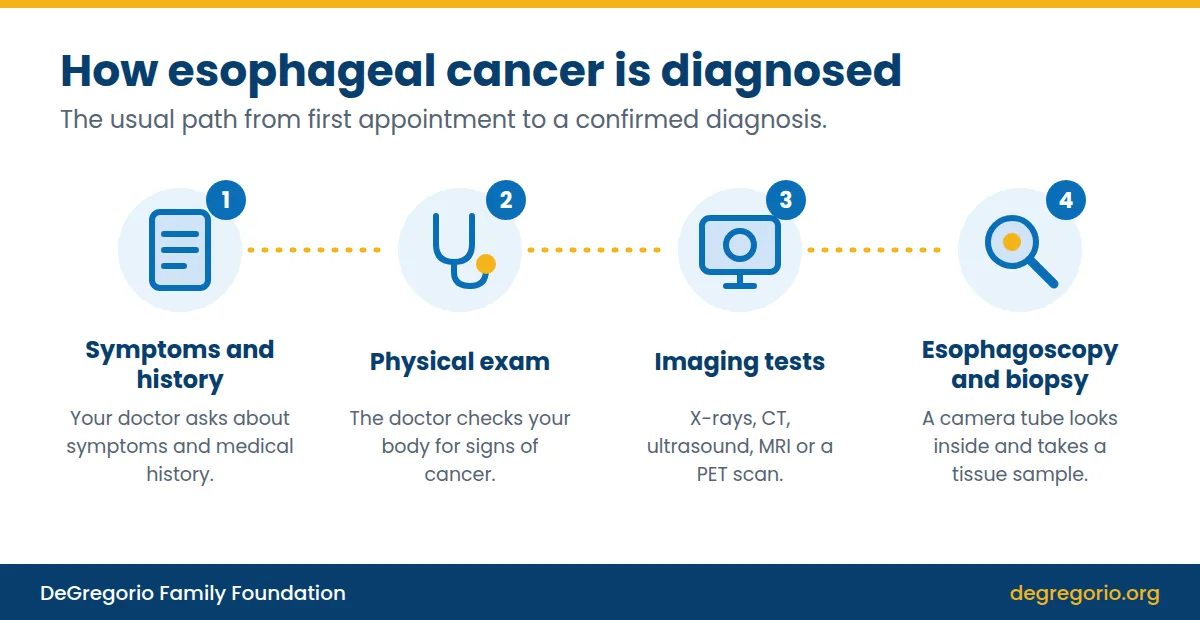
First, your doctor is going to ask you questions about your symptoms and medical history. You’ll likely undergo a physical exam where the physician looks at your body for possible signs of esophageal cancer.
Then, you will have imaging tests performed, such as X-rays, CT scans or ultrasound (sound waves). You may also need to undergo an MRI or a PET scan. Doctors can also diagnose esophageal cancer with the use of esophagoscopy. This process involves a flexible and narrow tube with a video camera being passed down your throat to look inside your body. A biopsy can be taken during an esophagoscopy to be viewed under a microscope by a pathologist to check for signs of cancer.
Final word

This report delivered information on the common and rare symptoms of esophageal cancer as well as its treatments.
However, the five-year survival rates of esophageal cancer and stomach cancer are rather low and scientists performing clinical research hope to change the outcome.
If you believe you have symptoms of esophageal or stomach cancer, contact your healthcare provider right away.
Sources
This page is general information, not medical advice. It is not a substitute for diagnosis or treatment by a qualified health professional. If you have symptoms or concerns, please talk to your doctor. Survival figures are population averages and cannot predict any individual’s outcome.