
Key takeaways
- H. pylori infection, chronic gastritis, smoking, a diet high in salted or smoked foods, and family history all raise the risk of stomach cancer.
- Early symptoms are mild and easy to miss: indigestion, bloating after eating, mild nausea, loss of appetite and heartburn.
- A gastroenterologist diagnoses stomach cancer with an upper endoscopy and biopsy, often alongside imaging such as a CT scan.
- Stomach cancer is most often cured when it is found early, before it has spread outside the stomach.
Let’s go through the different causes and symptoms of stomach cancer. Then, we’ll touch on some of the current ways to diagnose and treat stomach cancer. Finally, we’ll discuss the survival rates and research concerning stomach cancer. This guide is based on information from the National Cancer Institute (NCI), the U.S. government’s principal agency for cancer research.
Possible causes of stomach cancer
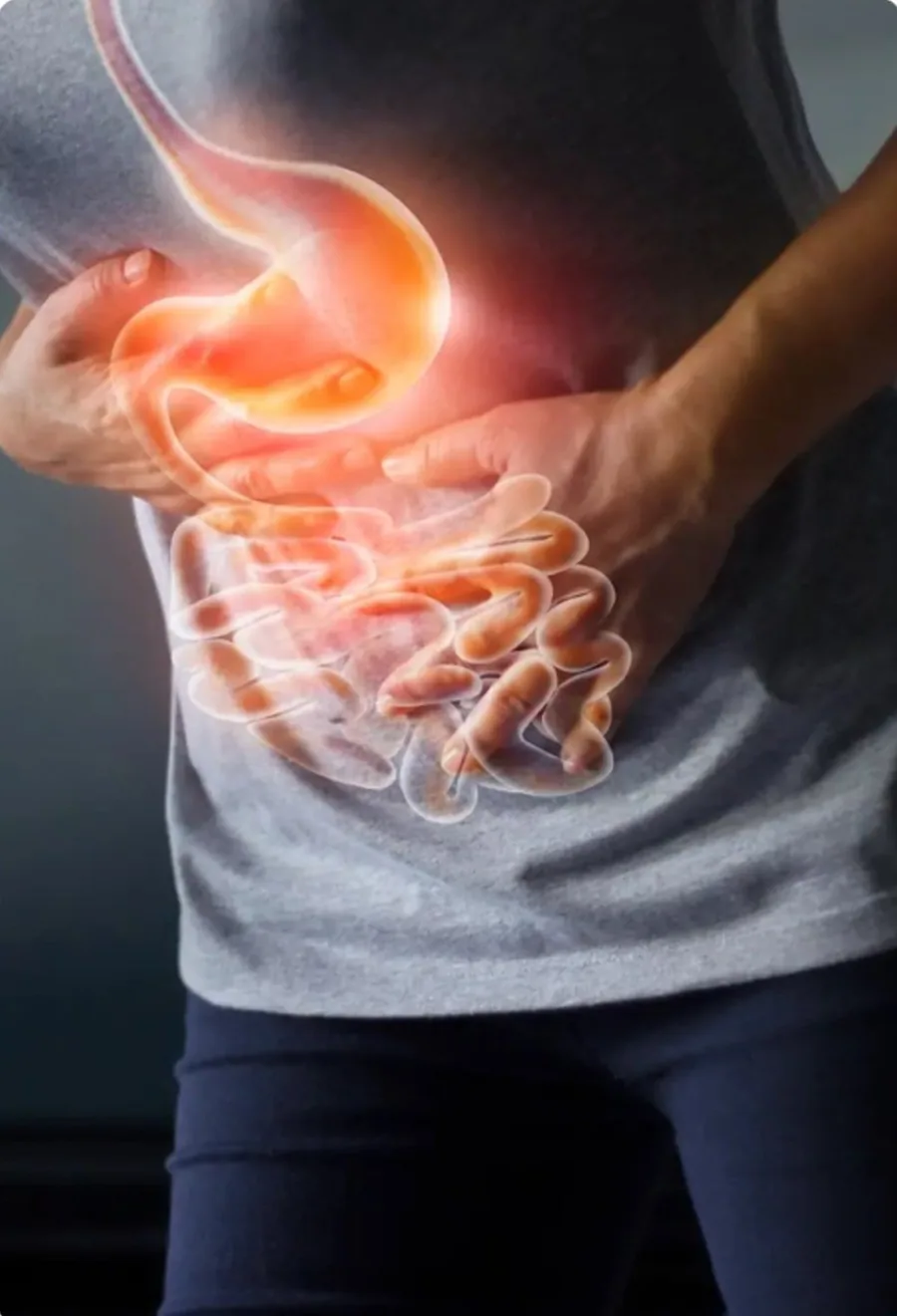
Stomach cancer occurs for many reasons. For some people, genetics plays a significant role. Here are some of the biggest risk factors associated with stomach cancer.
- Having any of the following medical conditions:
- Helicobacter pylori (H. pylori) infection of the stomach
- Chronic gastritis (inflammation of the stomach)
- Pernicious anemia
- Intestinal metaplasia (a condition in which the normal stomach lining is replaced with the cells that line the intestines)
- Gastric polyps
- Epstein-Barr virus infection
- Familial syndromes (including familial adenomatous polyposis)
- Eating a diet high in salted, smoked foods and low in fruits and vegetables.
- Eating foods that have not been prepared or stored properly.
- Being older or male.
- Smoking cigarettes.
- Having a mother, father, sister, or brother who has had stomach cancer.
Stomach cancer symptoms
Symptoms often change as the disease progresses. Early signs can feel like ordinary stomach trouble, which is why they are easy to overlook.
Early stage symptoms
- Indigestion and stomach discomfort
- A bloated feeling after eating
- Mild nausea
- Loss of appetite
- Heartburn
Advanced stage symptoms
- Blood in the stool
- Vomiting
- Weight loss for no known reason
- Stomach pain
- Jaundice (yellowing of eyes and skin)
- Ascites (build-up of fluid in the abdomen)
- Trouble swallowing
How stomach cancer is diagnosed
If you or your doctor suspect you may have stomach cancer, make an appointment with a gastroenterologist, which is a doctor who specializes in the digestive system. During an appointment, they will ask you to provide them with stool and blood samples alongside a thorough physical examination.
They may also ask for imaging, including an:
- Upper gastrointestinal endoscopy, where a doctor inserts a thin, lighted tube (an endoscope) into your mouth, down your esophagus, and into your stomach while you’re sedated or under anesthesia. The endoscope allows your doctor to look at the inner lining of the stomach wall. It can also be used to take a sample (biopsy) of any areas your doctor wants analyzed by a pathologist (a doctor who specializes in diagnosing disease).
- Barium swallow X-rays or upper GI series. In this test you drink a liquid solution containing barium, a silver-white metal that shows up on an X-ray and helps doctors see a clear image of any potential abnormalities.
- CT scan (CAT scan). A CT scan is a procedure that makes a series of detailed pictures of areas inside the body, taken with an X-ray machine linked to a computer.

Stomach cancer cure and treatments
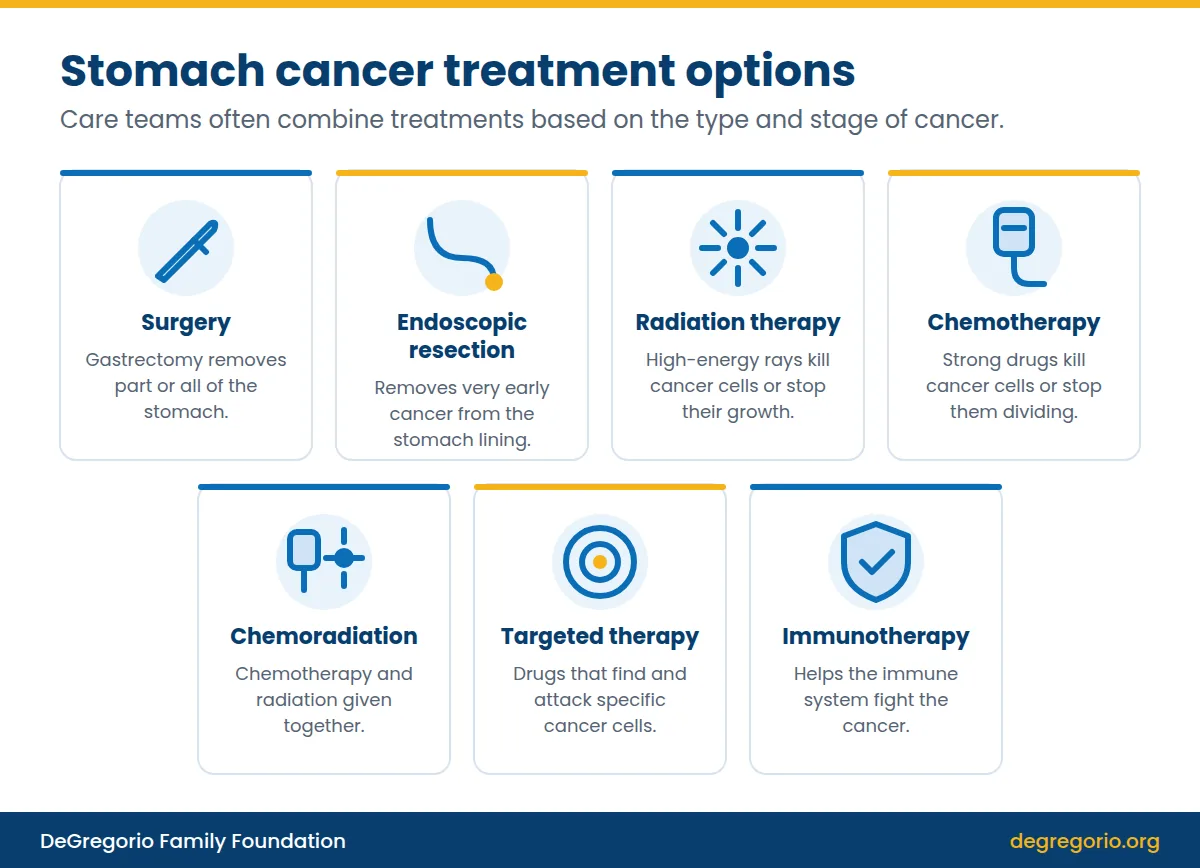
In most cases, stomach cancers are only cured when diagnosed in the early stages. Your care team may recommend one or more of the following treatments in an attempt to get your stomach cancer into remission, including surgery, radiation therapy, chemotherapy, chemoradiation, targeted therapy and immunotherapy.
Surgery is a common treatment for stomach cancer. The most common operation is a gastrectomy, which removes part or all of the stomach. Surgery may also be used to relieve symptoms if the tumor is blocking the stomach, but the cancer cannot be removed.
Endoscopic mucosal resection is a procedure that uses an endoscope to remove very early cancer from the lining of the stomach without open surgery.
Radiation therapy targets cancer cells by using high-energy X-rays or other types of radiation to kill them or keep them from growing. The approach depends on the type and stage of the cancer being treated. Chemotherapy uses strong drugs to kill cancer cells or stop them from dividing, and chemoradiation combines chemotherapy and radiation therapy to increase the effects of both.
Targeted therapy uses drugs or other substances to identify and attack specific cancer cells. Usually, targeted therapies are less harmful than chemotherapy or radiation therapy. Patients have special nutritional needs during treatment. Immunotherapy is a treatment that uses the patient’s immune system to fight cancer.
Final word

This guide covered the causes, symptoms, diagnosis, treatments and survival rates of stomach cancer. Survival rates remain low because the disease is often found late, and ongoing research into earlier detection and better treatments aims to change that.
If you believe you have symptoms of stomach cancer, contact your healthcare provider right away.
Sources
This page is general information, not medical advice. It is not a substitute for diagnosis or treatment by a qualified health professional. If you have symptoms or concerns, please talk to your doctor. Survival figures are population averages and cannot predict any individual’s outcome.